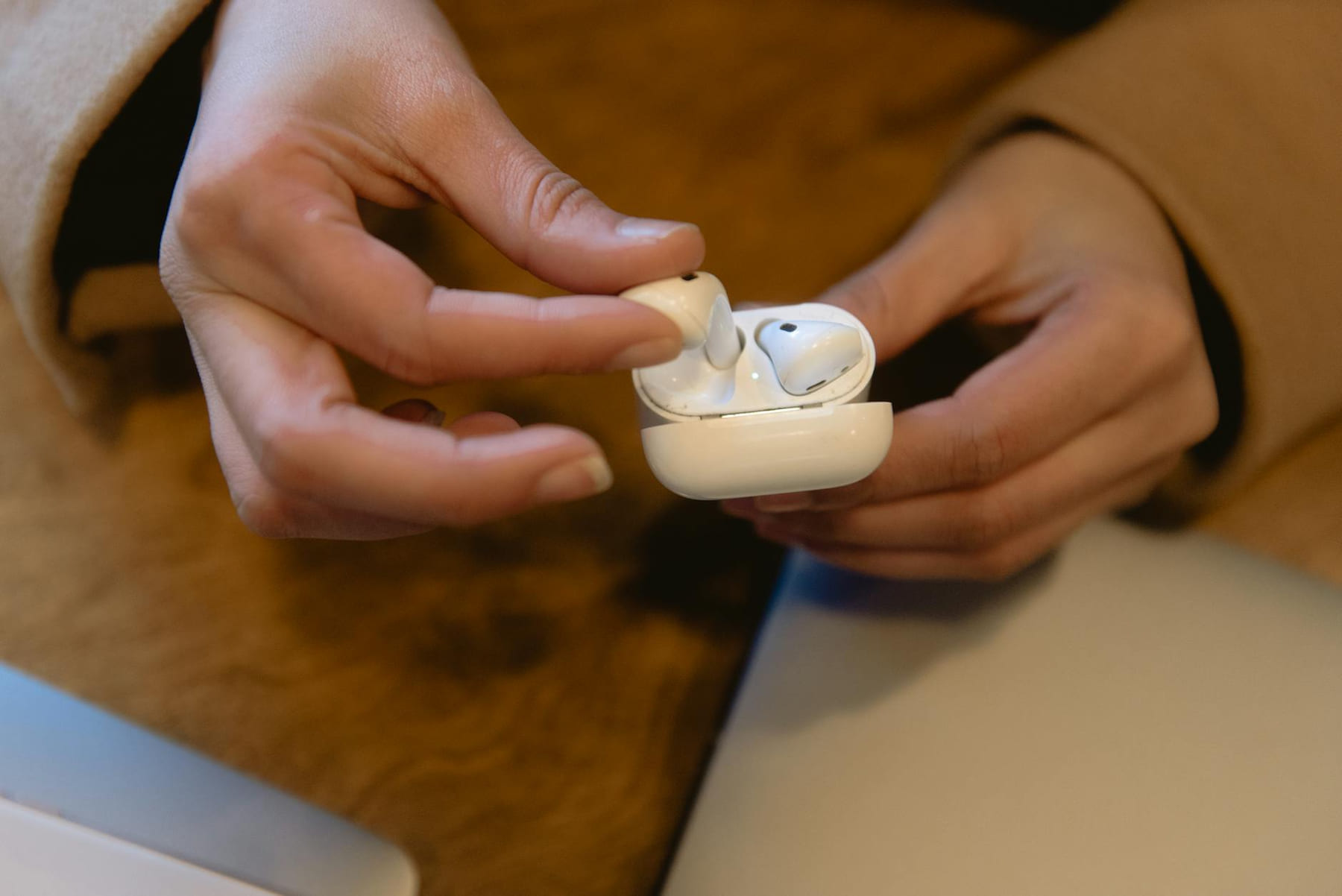
How it works: These systems utilize object-based audio, meaning individual sounds - a bird chirping, a car passing, a voice - are treated as separate “objects” within the sound field. The playback device then dynamically adjusts the audio output to create a realistic and three-dimensional soundstage. This is achieved through advanced processing and, often, the use of head-tracking technology in headphones.
Practical Example: Consider the AirPods Pro (3rd Generation). With Spatial Audio enabled, listening to a song with distinct instrumental layers - drums, bass, vocals, guitar - feels remarkably more expansive. You can almost “place” each instrument in a different area of the soundstage, creating a richer and more engaging listening experience. Similarly, gaming headphones utilizing spatial audio can dramatically improve immersion, making you feel like you’re truly in the game world.
Personalized Audio: AI is Your New Sound Engineer (Audio Tech)
One of the most significant shifts in audio tech is the increasing role of Artificial Intelligence (AI). Gone are the days of one-size-fits-all audio profiles. AI-powered systems are now analyzing your listening habits, hearing profile, and even environmental factors to create a truly personalized sound experience.
How it works: AI algorithms learn your preferences - what frequencies you tend to boost, what types of music you enjoy, and even how you listen in different environments (e.g., quiet room vs. noisy commute). Based on this data, the system dynamically adjusts EQ settings, soundstage, and even compression to optimize the audio for you. Some systems even adapt in real-time based on your movements and the surrounding environment.
Practical Example: The Sony WH-1000XM5 headphones feature “Adaptive Sound Control,” which uses AI to automatically adjust the sound profile based on your location and activity. If you’re walking in a city, it might boost the volume of ambient sounds for safety. If you’re in a meeting, it might reduce the volume and filter out background noise. Similarly, services like Spotify and Apple Music are increasingly leveraging AI to create personalized playlists and suggest music based on your individual tastes - a step towards truly customized audio.
The Evolution of Headphones: Comfort, Connectivity, and Beyond
Headphones have undergone a massive transformation in recent years. Beyond just sound quality, manufacturers are prioritizing comfort, connectivity, and new features.
- Comfort Redefined: Materials like memory foam and lightweight designs are becoming increasingly common, allowing for hours of comfortable listening.
- Wireless Dominance: Bluetooth 5.3 and beyond offer improved stability, range, and power efficiency. Multipoint pairing allows you to seamlessly switch between devices.
- Advanced Connectivity: USB-C is becoming the standard port, offering faster charging and data transfer. Some headphones now support high-resolution audio codecs like LDAC and aptX Adaptive for superior sound quality.
- Health & Wellness Features: Headphones are increasingly incorporating features like heart rate monitoring, sleep tracking, and even stress detection - blurring the lines between audio and wellness technology.
Practical Example: The Bose QuietComfort Ultra Headphones exemplify this evolution. They boast exceptional noise cancellation, a supremely comfortable design, multipoint pairing, and support for high-resolution audio. The addition of health tracking features demonstrates how headphones are becoming more than just listening devices - they’re becoming personal wellness companions.
Immersive Sound Systems: Bringing Home the Theater Experience
While high-end headphones are great for personal listening, many audiophiles are turning to immersive sound systems to recreate the cinematic experience at home. Technologies like Dolby Atmos for Home Theater and DTS:X are revolutionizing how we experience movies and music.
How it works: These systems utilize object-based audio, just like spatial audio headphones, but across a wider sound field. Multiple speakers are strategically placed throughout the room to create a three-dimensional soundstage that accurately reproduces the soundscape of the original recording. Height channels are particularly important for creating a truly immersive experience.
Practical Example: Setting up a Dolby Atmos Home Theater involves carefully positioning speakers to create a cohesive soundstage. The Sony HT-A9 and Samsung QN99R are popular choices, offering impressive sound quality and Atmos support. However, proper room acoustics and speaker placement are crucial for achieving optimal results - consider consulting with an audio professional if you're serious about creating a truly immersive home theater experience.
Pick the easiest win first
Most people get better results with Audio Tech: What’s New & How to Use It when they narrow the decision to one real problem. That could be saving time, trimming cost, reducing friction, or making the routine easier to keep up.
This usually gets easier once you make a short list of priorities. A tighter list tends to produce better decisions than trying to solve every possible problem at once.
Another useful filter is asking what you would still recommend if the budget got tighter, the schedule got busier, or the setup had to be easier for someone else to manage. The answers to that question usually reveal which advice is durable and which advice only works under ideal conditions.
The tradeoff most people notice late
One common mistake with Audio Tech: What’s New & How to Use It is expecting every option to solve the whole problem. In reality, some choices are better for convenience, some for reliability, and some simply for keeping the budget under control.
Before spending more, it is worth checking the setup, upkeep, and learning curve. Small hassles matter here because they are usually what decide whether something stays useful or gets ignored.
It is easy to underestimate how much clarity comes from removing one unnecessary layer. In practice, trimming one complication often does more for Audio Tech: What’s New & How to Use It than adding one more feature, one more product, or one more clever workaround.
What makes this easier to live with
The options that age well are usually the ones that are easy to repeat. Reliability and low hassle often matter more than the most impressive-looking feature list.
In a topic like Consumer tech, manageable almost always beats impressive. If something is simple enough to keep using, it is usually doing more real work for you.
Readers usually get better results when they treat advice as something to test and refine, not something to obey perfectly. That mindset creates room for real judgment, which is often the difference between content that sounds smart and guidance that is actually useful.
Keep This Practical
Audio gear gets easier to judge once you listen for the few details that matter to you most: comfort, clarity, battery life, and how the device fits your routine. Start there and ignore the noise.
Tools Worth A Look
If the article helped you narrow what matters in audio gear, the products below are the next logical place to look.
- Digital Consumer Behavior 1st EditionCool: How the Brain’s Hidden Quest for Cool Drives Our Economy and Shapes Our WorldJ-Tech Digital HDMI Audio Extractor 4K 60Hz HDMI to Optical SPDIF + RCA, Supports HDMI ARC Dolby Digital DTS CEC HDCP 1.4OEJBK I25 Ultra: Powerhouse 16GB/512GB, 2-Day 7000mAh Battery, Huge 6.99" Android 14 Phone w/Built-in Stylus - Your All-in-One DeviceDigital Makeover: How L'Oreal Put People First to Build a Beauty Tech Powerhouse
Some of the links on this page are Amazon affiliate links, which means I may earn a small commission if you make a purchase through them. As an Amazon Associate, I earn from qualifying purchases.
Related ReadingMore from The Tech Shelf

Tech Made Easy: Starting Points
is easier to make sense of when you break it down into the part that matters most first. Instead of chasing every option at once, it usually helps to focus on what.
Audio’s Next Wave: What’s Changing Now
s Next Wave: What can be easier to approach when you start with a few practical basics. Spatial audio has moved far beyond just a buzzword. It’s now a core feature.

Audio Trends: Avoiding Common Pitfalls
Audio Tech Trends Mistakes to Avoid - The Tech Shelf Audio Tech Trends Mistakes to Avoid - Don’t Let the Hype Hurt Your Ears 1. The Codec Conundrum: Don’t Get Lost.